ap_transient_memory |
Durant et al., 2019 |
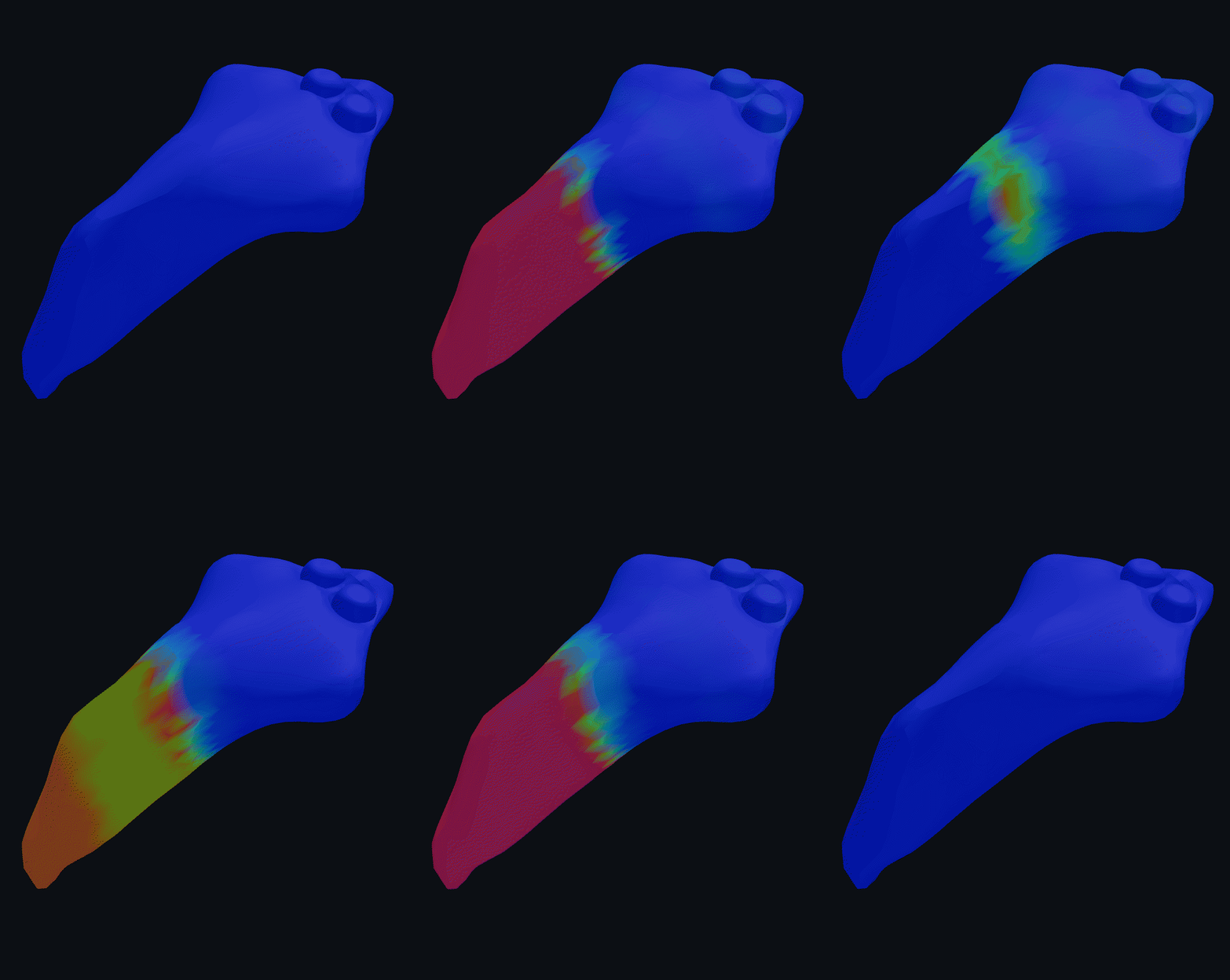
Matter transient-depolarization memory scenario plus no-memory control; Optics can display the resulting sequence. |
Qualitative fixture exists; numeric timing/value targets still need source extraction. |
gap_block_conductance |
Oviedo et al., 2010; Emmons-Bell et al., 2015 |
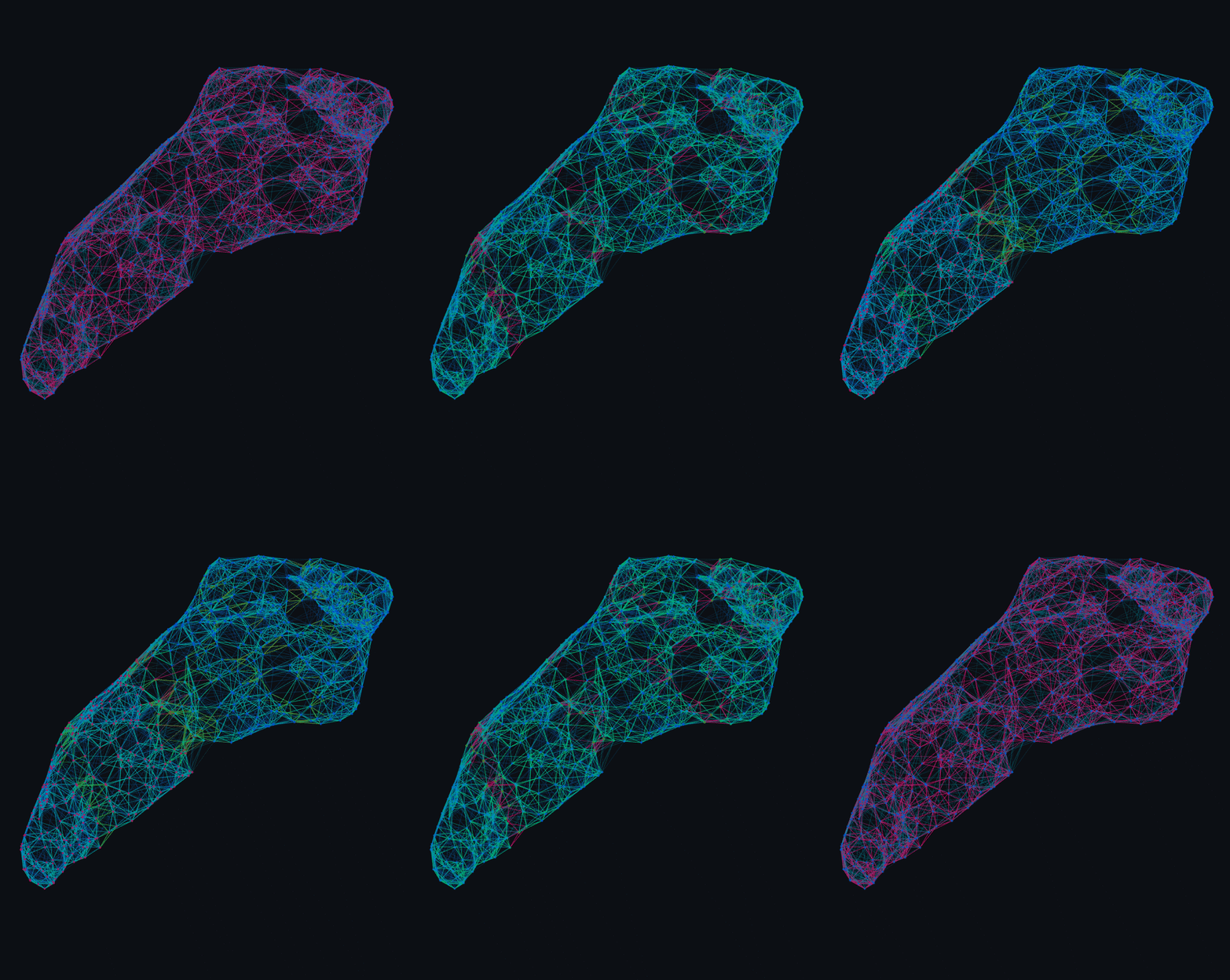
Matter gap-block scenario reduces cross-band conductance and records outcome traces. |
Qualitative fixture exists; figure/table targets still need extraction before thresholds. |
head_vs_tail_voltage |
Beane et al., 2011 |
Represented only as normalized AP voltage and head/tail readout context. |
Planned annotation layer; no named ion-channel or millivolt claim yet. |
head_size_scaling |
Beane et al., 2013 |
Normalized region-extent metrics exist for annotation and validation fixtures. |
No calibrated organ-size or physical morphometry claim yet. |
species_like_head_labels |
Emmons-Bell et al., 2015 |
Synthetic species-like head-shape taxonomy fixture exists for educational labeling. |
Non-calibrated; generated labels avoid paper figure reuse. |
planformdb_curated_subset |
PlanformDB; Lobo et al., 2013 |
Rights-safe derived fixture records 14 selected Oviedo 2010 source IDs covering octanol crop-position, ventral nerve cord timing, and innexin RNAi crop-position labels, with transform notes, notice text, and use limits. |
Expanded review fixture exists in Hub and Matter; metadata/annotation only, not runtime dynamics authority or a predictor. |
planarian_xr_data_first_navigation |
Planarian Regeneration XR |
The atlas now opens with a top workflow selector, a Source Atlas guide, a visible inspector section index, filterable geometry source cards, and closed-by-default foldouts for source maps, technical details, and caveats. The default visible source layer is posterior.Smt.SptGraph; the ETLSM2 volume marker GLB is available but not active at startup. |
Public navigation and onboarding improvement; it changes how evidence lanes are presented, not the scientific claim boundary. |
planarian_xr_source_map_sidecars |
Planarian Regeneration XR; Zenodo dataset1/dataset2 object IDs |
The implementation plan defines public-safe sidecar envelopes for segment-node, point-ID, label-ID, FirstPoint-ID, and volume-surface mappings. Sidecars may include public element IDs, transforms, hashes, counts, and caveats, but not raw source payloads, private decoder details, local paths, logs, or review packets. |
Planned bridge before object-level picking, nearest-object annotation, or observed-geometry dynamics binding can be treated as reviewed behavior. |
zenodo_11724834_observed_glb_overlays |
Lu, 2024; CC BY 4.0 |
Planarian Regeneration XR bundles reviewed GLB line overlays derived from posterior.Smt.SptGraph and anterior-filtered(2).CorrelationLines: 61,744 / 17,880 vertices, 30,872 / 8,940 line segments, SHA-256 daab05fbf234bb6db8b6618520982c1d159ca553a067825eba42929449478a2f and aa462e4141be28a5f7bb5d187a7b074a945815f19d3397110e90a8e102428ac7. It also bundles the planarianneuronpool.Cloud HxCluster marker GLB with 3,467 source points, 20,802 vertices, 10,401 marker line segments, and SHA-256 97a18266dfa0cfa0f1fac739cf01c64c5a02ea0413d5a0b7aa81e3eb24e45787; the Result nuclei centroid marker GLB with 4,304 centroids, 25,824 vertices, 12,912 marker line segments, and SHA-256 7a191333ff455427f63a0ff65d112d2073473e0d22966cfa5c506e2204ad1af2; and a Result(2).Label-Analysis(2) FirstPoint anchor marker GLB with 3,567 anchors, 21,402 vertices, 10,701 marker line segments, and SHA-256 7e26fc68b5f1297f33b9efc1375b0162646bd030f35e4a3c179e979679de1fcc. Source DOI/object IDs, attribution, and geometry notice are recorded. |
Observed source-derived atlas geometry only; raw Zenodo files, source exports, decoder tooling, and conversion intermediates remain outside the public bundle. Nuclei markers are centroids, FirstPoint anchors are not centroids, and the overlays are not a regeneration simulation. |
zenodo_neuron_cloud_bioelectric_replay |
Lu, 2024; Planarian XR public GLB replay generator |
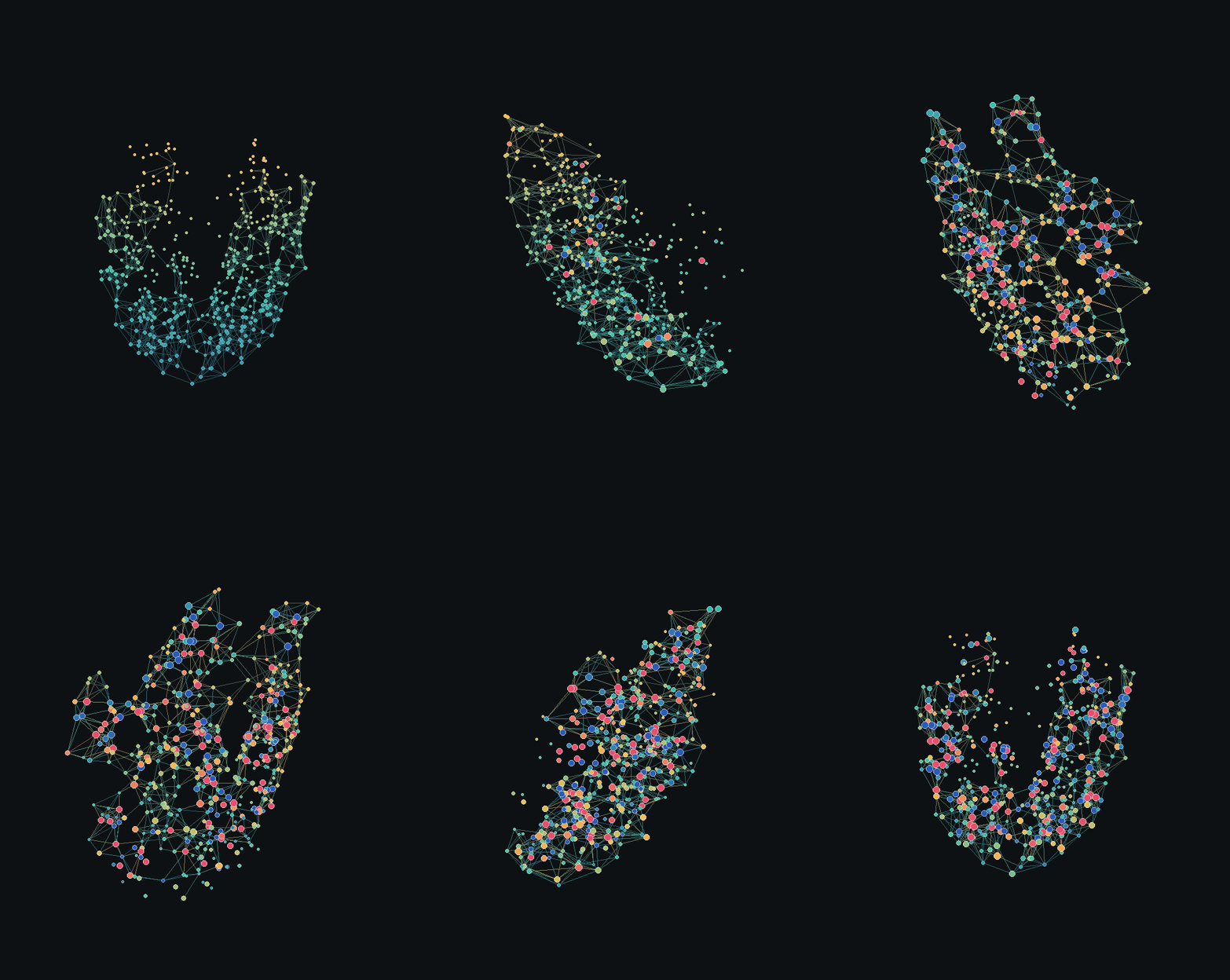
The reviewed planarianneuronpool.Cloud GLB supplies display positions for zenodo-neuron-cloud-bioelectric-replay.gif: 480 sampled nodes, 1,767 nearest-neighbor conductance edges, 96 frames at 720 x 860 pixels, GIF SHA-256 de307a94e2d67ae378816362c33cd43dbf49f6f288a5bbf796e057f09ab78ee2. |
Model-inspired display replay only. It is not a measured bioelectric trace, calibrated physiology, mechanistic model output, or predictive regeneration simulation. |
zenodo_12533272_volume_marker_glb |
Lu, 2024 dataset2; CC BY 4.0 |
Public-safe sidecar and derivative facts are recorded: mergeall.am.lda verifies a 4469 x 7887 x 3520 16-bit tiled volume, 124,069,450,560 voxels, Gzip tile compression, intensity bounds from 0 to 44182, and a linked mergeall.am.dat volume of about 34.5 GB. The linked volume was downloaded under ignored raw storage and checksum-verified against MD5 a596aab89a5d793cfc71329e809b81ca. The public derivative mergeall-volume-lod3-high-intensity.glb contains 5,089 selected high-intensity marker points, 30,534 vertices, 15,267 marker line segments, and SHA-256 8fead939a8aabba7ee9c433fe0d6e158f490c924097b5c7fa35919072e39ff22; public UV/UW/VW maximum-intensity projection PNGs accompany the GLB. |
Observed source-derived atlas geometry only and not active in the default viewer state. It is not a full-resolution volume, not a segmented surface, not a measured bioelectric trace, and not a predictive regeneration simulation. Raw sidecar XML, raw histogram payload, TileMinMax payload, contributor-local source path, source volume, source export, intermediate, decoder output, and review packets remain outside the public bundle. |
zenodo_12533272_volume_bioelectric_replay |
Lu, 2024 dataset2; Planarian XR public GLB replay generator |
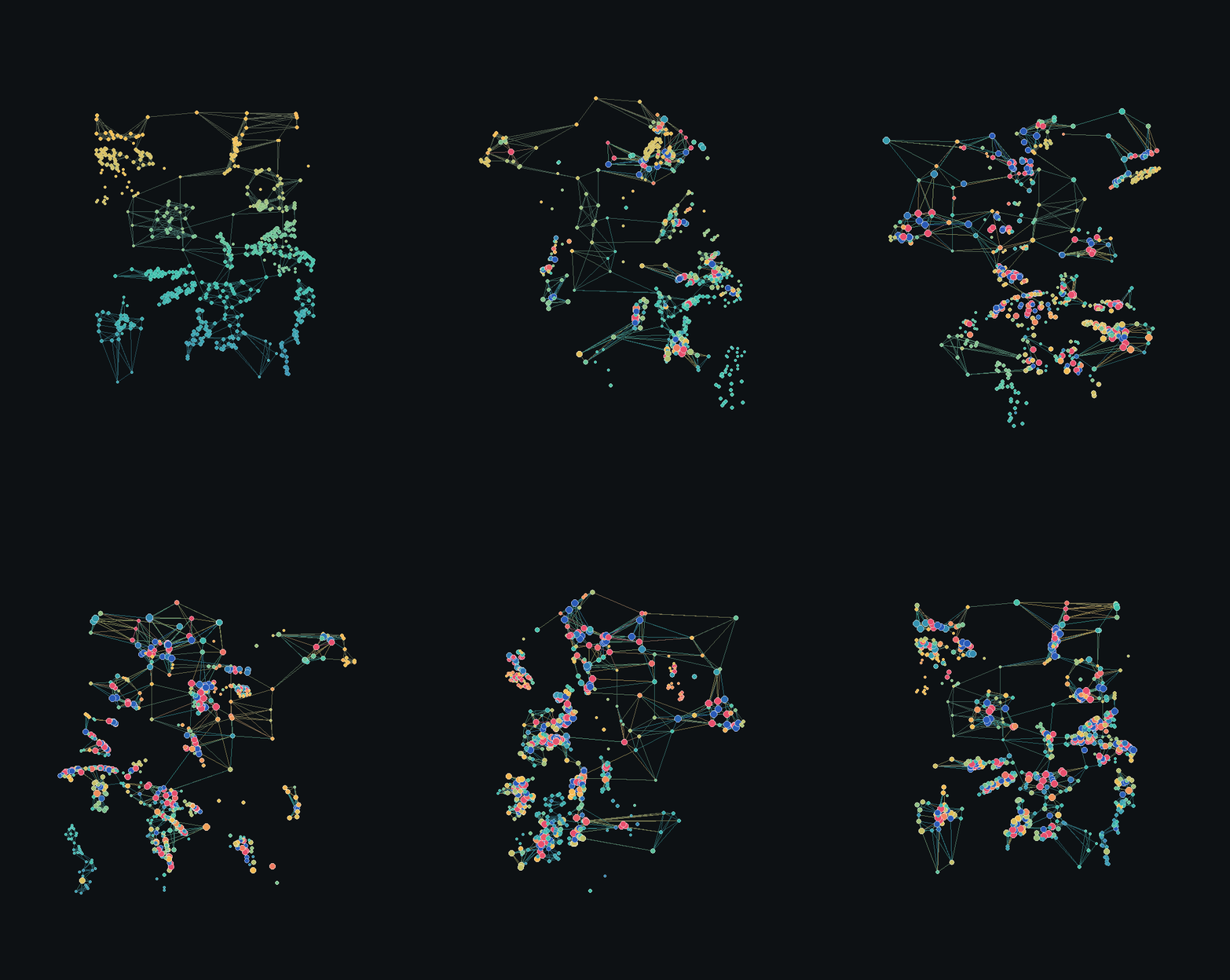
The reviewed mergeall-volume-lod3-high-intensity.glb supplies display positions for zenodo-12533272-volume-bioelectric-replay.gif: 5,089 source points sampled into 640 nodes, 2,430 nearest-neighbor conductance edges, 96 frames at 720 x 860 pixels, GIF SHA-256 6571a79455c0d84bd9981ce3c3151de9a15f089719ae8b43fb5961251aeade53. |
Model-inspired display replay only. It is not a measured bioelectric trace, calibrated physiology, mechanistic model output, or predictive regeneration simulation. |
planarian_xr_schematic_replay_manifest |
Planarian XR schematic transition adapter; Sketchfab educational mesh substrate |
The app registers sim_schematic_regeneration_replay_v0, a model-inspired adapter descriptor for src/worm/RegenerationAnimator with a SHA-256 replay-descriptor hash. |
Display replay only. It is not calibrated, mechanistic, predictive, or bound to the observed Zenodo GLB overlays. |