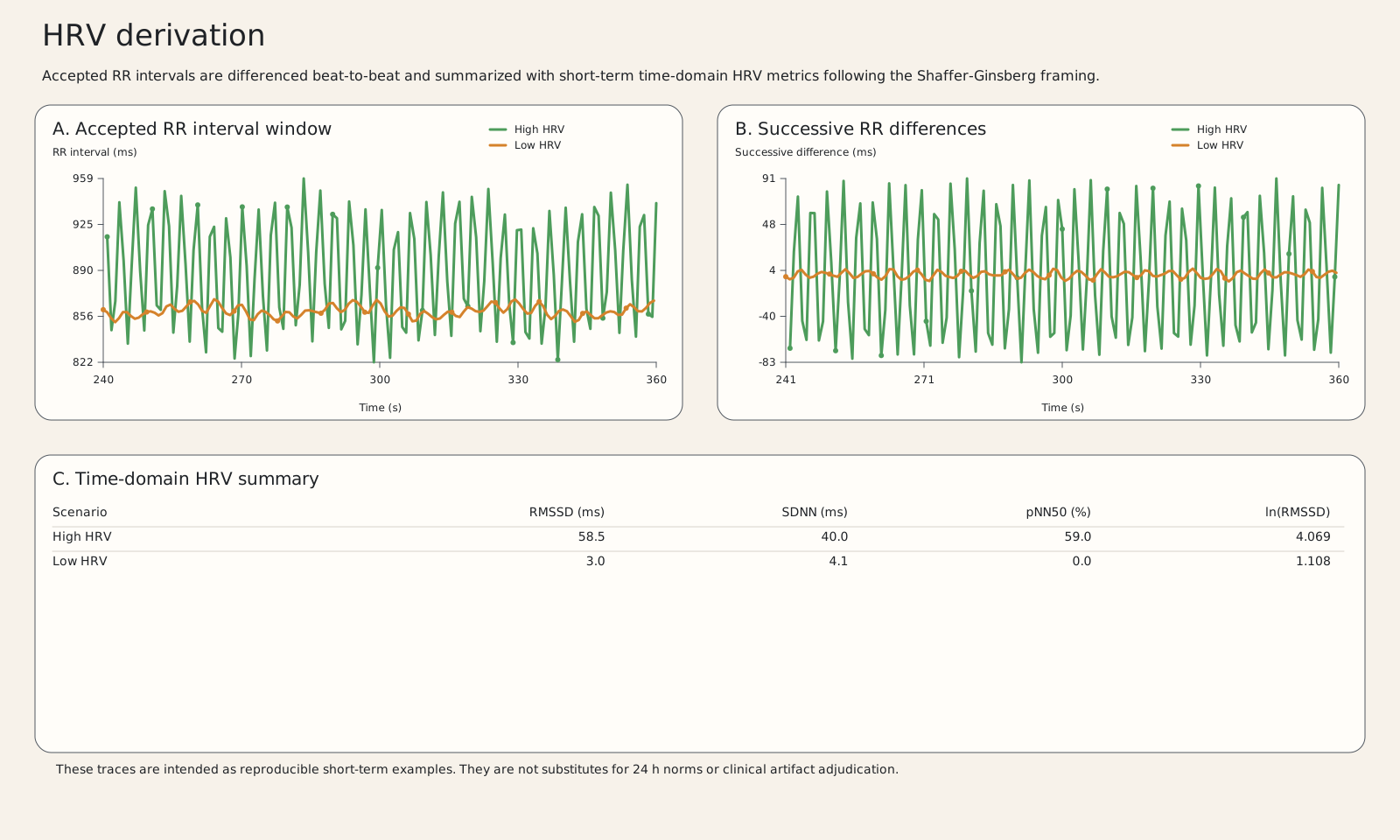
This page uses hrv_high and hrv_low as the canonical pair for explaining
how accepted RR intervals become successive RR differences and then the
short-term time-domain HRV metrics surfaced by the app. The framing is aligned
to the short-term HRV guidance summarized by
Shaffer and Ginsberg (2017), while
remaining explicit that this repository publishes short-term RR-derived
telemetry rather than clinical 24 h norms.
Open formula sheet Download derivation SVG Download figure pack PDF
Source Files
Computation Path
AcceptedRrSamples
-> AdjacentRrDeltas
-> CurrentRmssdMs / SdnnMs / Pnn50Percent / LnRmssd
Hrv.Diagnostics.AcceptedRrSamplesexposes the RR window accepted by the tracker.Hrv.Diagnostics.AdjacentRrDeltasexposes the beat-to-beat delta series used byRMSSDand the related time-domain solves.Hrv.Telemetry.CurrentRmssdMs,SdnnMs,Pnn50Percent, andLnRmssdexpose the final documentation values shown in the figure.
Interpretation Notes
- The tracker uses accepted RR intervals rather than a clinically edited Holter NN series, so the figures should be described as short-term RR-derived telemetry.
ln(RMSSD)is included because many papers report the log-transformed form to reduce skew and improve comparability across sessions.
Showcase Preset
The showcase-v1 preset keeps the HRV tracker on a deterministic 120 s
window with a 32-sample minimum so the exported figures stay reproducible and
still map cleanly onto the longer-window operator guidance in the main workflow
docs.